From the MLK Community Center to the Vanderbilt hotel, friends are gathering to play
Photos by Cate Brown
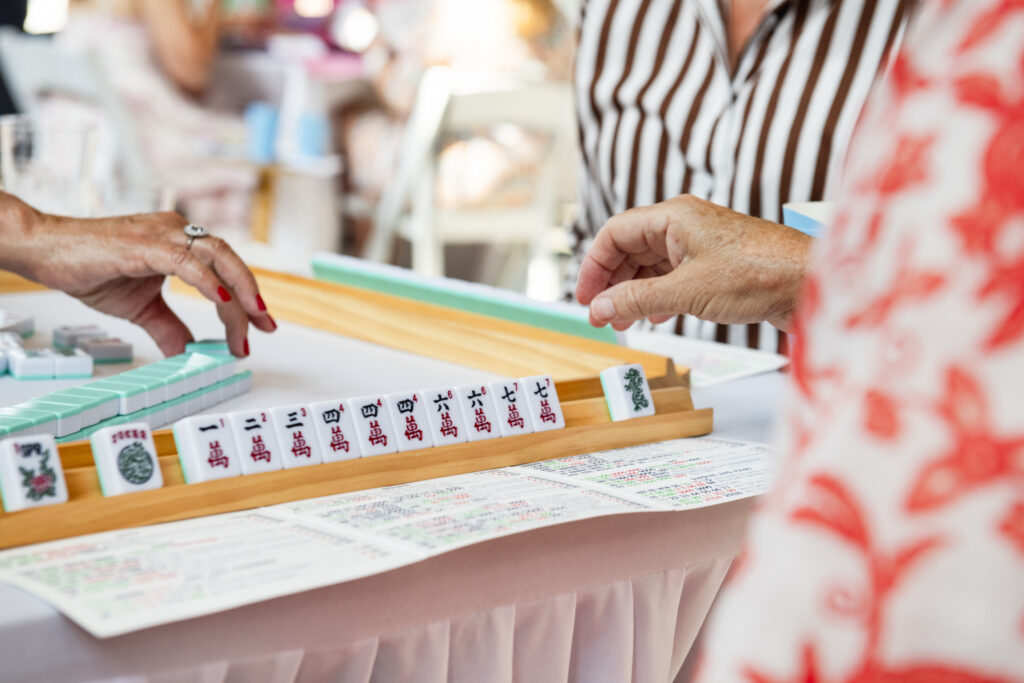
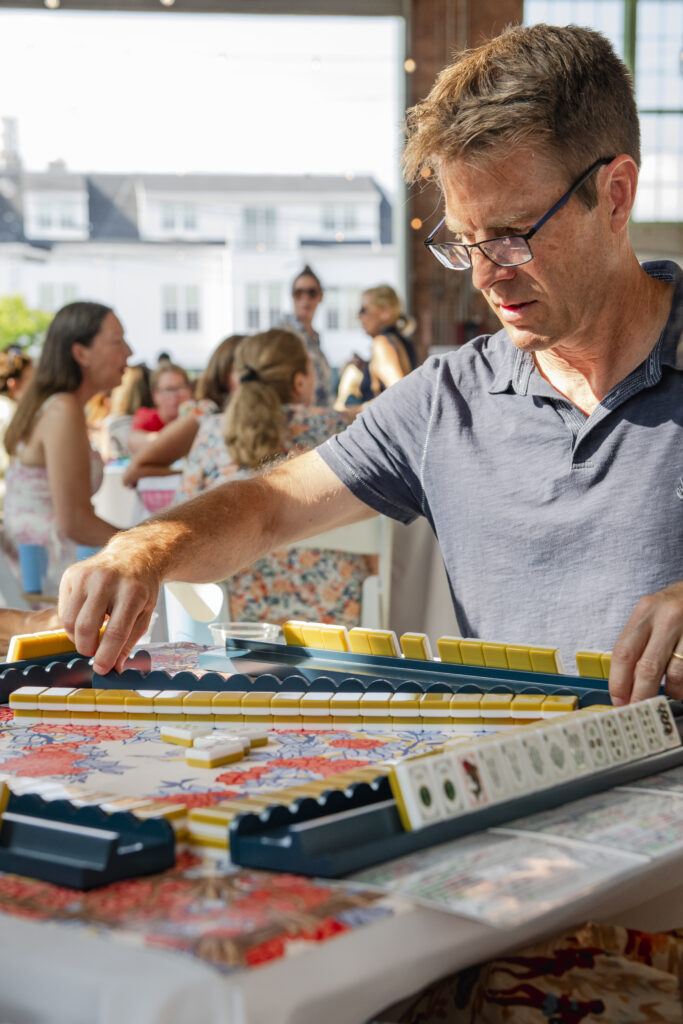
Across Aquidneck Island, tables of four feverishly draw and discard small, smooth tiles while silently scheming to collect and expose a winning sequence of singles, pairs, pungs, kongs, or quints and be the first to declare “Mahjong!” The game, which originated in China during the 1880s, has become wildly popular throughout the United States, including in Newport, where players have sought and sorted bams, craks, dots, flowers, dragons, winds, and jokers for more than a century.
Members of the city’s wealthy summer colony played mahjong during the 1920s in the sprawling Newport “summer cottages” they occupied just six to eight weeks a year. But was a merchant in the China trade the first in the city to own a set of mahjong tiles and to introduce the game to the City-by-the-Sea? William Henry King, his nephew, David K. King Jr., and William Shepard Wetmore each made a fortune trading teas, silks, and opium after China was defeated in the Opium Wars of the mid 1800s and forced to legalize the importation of the drug as well as open its ports more widely to foreign trade and travelers.
The Kings owned the Kingscote estate on Newport’s Bellevue Avenue. Generations of the family enjoyed summers there from 1863 to 1972, when the last descendant bequeathed the property to the Preservation Society of Newport County. A mahjong set David K. King, Jr. purchased in China in the early 20th century is among the items included in the gift.
The wooden tiles are covered in ivory veneer and etched with both Chinese and Western characters. They are accompanied by ivory “stakes” or racks, and stored in a wooden box stenciled with gold.
King likely purchased the set after encountering groups of Chinese people playing the unfamiliar game while he was conducting business in Shanghai and other port cities. He brought it to Newport, but there is nothing to confirm that King, his wife, Ella, or anyone ever played mahjong at the house, said assistant curator Eve Loftus of the Preservation Society.
The set is displayed in the Kingscote library, where the family kept it 100 years ago, Loftus said.
* * *
An internationally recognized expert on the history of mahjong believes, Newport has a part in its story.
“Newport played a role in the 1920s history of the game, in particular,” says Annelise Heinz, author of “Mahjong: A Chinese Game and the Making of Modern American Culture.”
“There were ivory sets owned by some of the wealthiest families in Newport, and they would have competitions over which had the most beautiful ivory mahjong set,” Heinz related during a virtual lecture series the Preservation Society presented during the coronavirus pandemic.
The world was aware that poachers hunting for tusks had pushed the elephant population close to extinction, so the careless extravagance playing out in Newport was shocking and made national news, she continued.
Stories of society members traveling between their homes in Newport and Palm Beach, depending on the season, and paying mahjong instructors at each location to improve their skills promoted the idea that the game of tiles was designed for the rich and sophisticated.
The object of the game and the rules of play haven’t changed: players select, pass, call, discard, and hold onto tiles with the goal of being the first to arrange 14 into one of hundreds of possible winning sequences. But while the game is the same, it no longer is limited to America’s most affluent.
A hundred years ago, only those with access to an expensive set of imported tiles etched with Chinese characters got a seat at the mahjong table. A contest of strategy and skill became a pastime reserved for the elite, who found its sense of exclusivity part of its appeal. Today’s mahjong players, however, consider that attitude as dead as a hand exposing a pair of jokers for a win.
* * *
American mahjong is all about inclusivity. Carrie Parker of Portsmouth and Dotsie Bohan of Newport have made it their business to make the game available to the masses.
Working independently, each mahjong maven routinely hauls piles of tiles, stacks of racks, and all the related table mats, dice, and 2026 “Official Standard Hands and Rules” game cards published by the National Mah Jongg League (it uses an older version of the game’s spelling) she needs for her next mahjong class or social event. The instructors travel to area senior and community centers, upscale restaurants and lounges, public libraries, country clubs, and church halls to teach people of all ages and backgrounds the rules, nuances, and etiquette of mahjong.
“It really has become such a great way of connecting with people,” says Parker, who plays seven days a week with a rotating roster of family, students, and friends. “It’s a nice way of building community and spending time with people.”
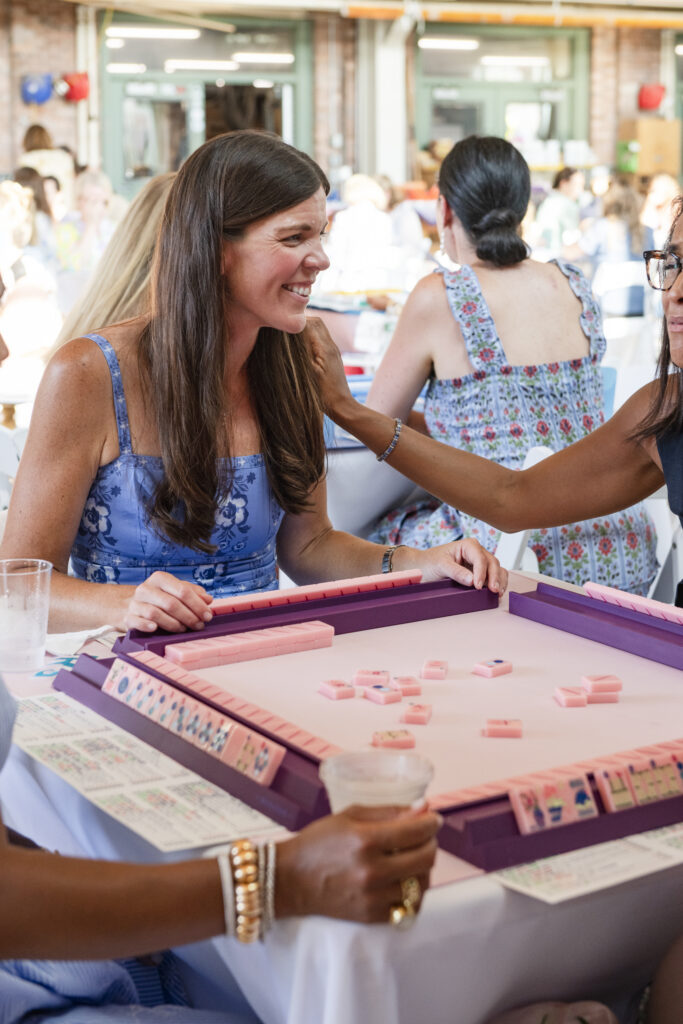
About 18 months ago she channeled her love for the game into her own business, Newport Mahjong & More. Parker offers private and group lessons and runs social events, including a Ladies League that provides women an opportunity to sharpen their mahjong play in a friendly and supportive space. As for Bohan, her first name is a variation of one of the game’s three suits— dots, craks, bams — so it’s no surprise she has had a lifelong interest in mahjong. She and her three sisters played while growing up in Georgia, Bohan says, and she became a serious player of American mahjong when she and her husband became fulltime residents of Newport about six years ago.
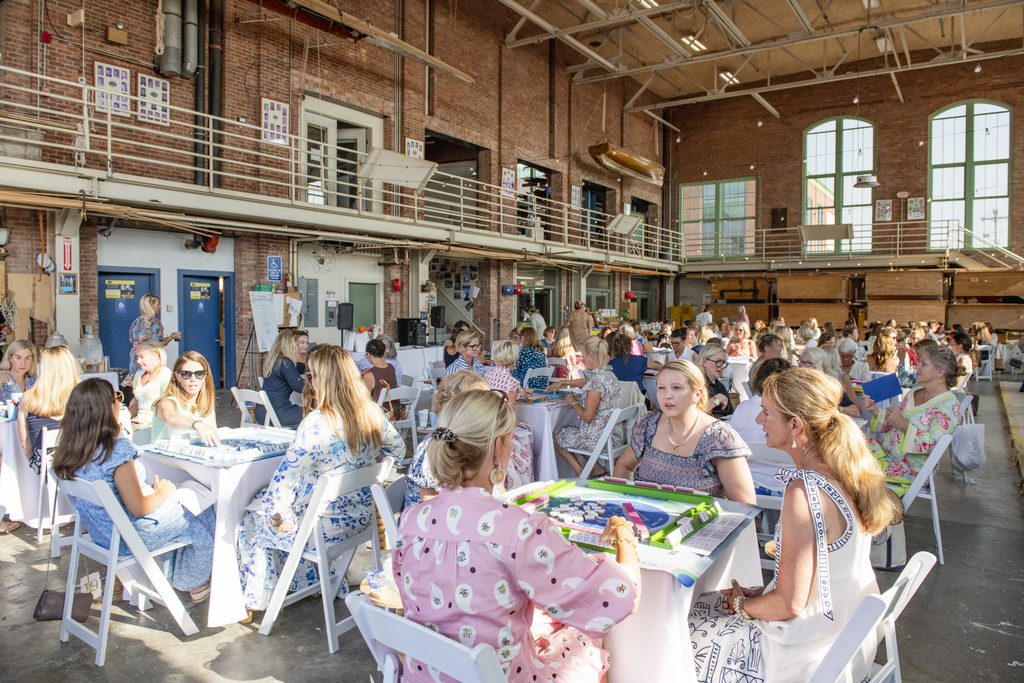
“It’s a good little community builder,” Bohan says of the game. “I personally think people want to get together.” That proved true in July when more than 100 enthusiasts attended the “Mah Jongg for Mental Health” benefit held at the International Yacht Restoration School’s Restoration Hall. Supporters paid for two hours of friendly competition while a guitar duo performed background music, and the downtown waterfront served as a backdrop.
Bohan’s business, Crak Bam Dotsie School of Mah Jongg, was the presenting sponsor; she served as emcee of the soldout event. It raised more than $40,000 for Newport Mental Health’s treatment programs for Newport County adults and children, said Kristen McClintock, marketing and communication manager.
In addition to teaching classes, both Parker and Bohan host open play opportunities at area restaurants, where participants can compete and eat and drink. Parker meets players at The Vanderbilt hotel on Wednesdays from noon to 2 p.m., and Bohan is at Stoneacre Brasserie on select Mondays at 5:30 p.m. Reservations are required.
* * *
The room is crowded and the chairs are filled Tuesdays from 4 to 6 p.m. at the Dr. Martin Luther King Jr. Community Center in Newport, where volunteer instructors Inez Trigg and Linda Bemis are demonstrating how to break walls and do the Charleston. Knowing there is no danger of splintering sheet rock or sprained ankles because the women are talking about mahjong, the students study the tiles on the racks before them and select three undesirables to pass to the player on their right. The game has begun.
Free mahjong classes are among the newest activities offered at the MLK Center, well known for its plentiful food pantry, free soup kitchen, and fresh Produce to the People program. Less known, perhaps, are the center’s recreational, social, artistic, and educational programs for adults and children.
“We try to present free classes and opportunities here,” says Executive Director Heather Hole Strout. Enrollment was at capacity for both eight-week mahjong clinics offered last spring; there are plans to continue the classes and possibly add a second day to the schedule this fall and winter.
“The classes fill up very, very quickly,” says Strout.
“The things we do here all come out of a need,” adds Erin Patel, the center’s community programs manager. A number of the area’s Hispanic residents participate in programs at the MLK center or volunteer there, she said, but they might be hesitant to join a mahjong class because of language problems. Instructor Trigg is bilingual, Patel said, so a session for Spanish-speaking students is possible.
* * *
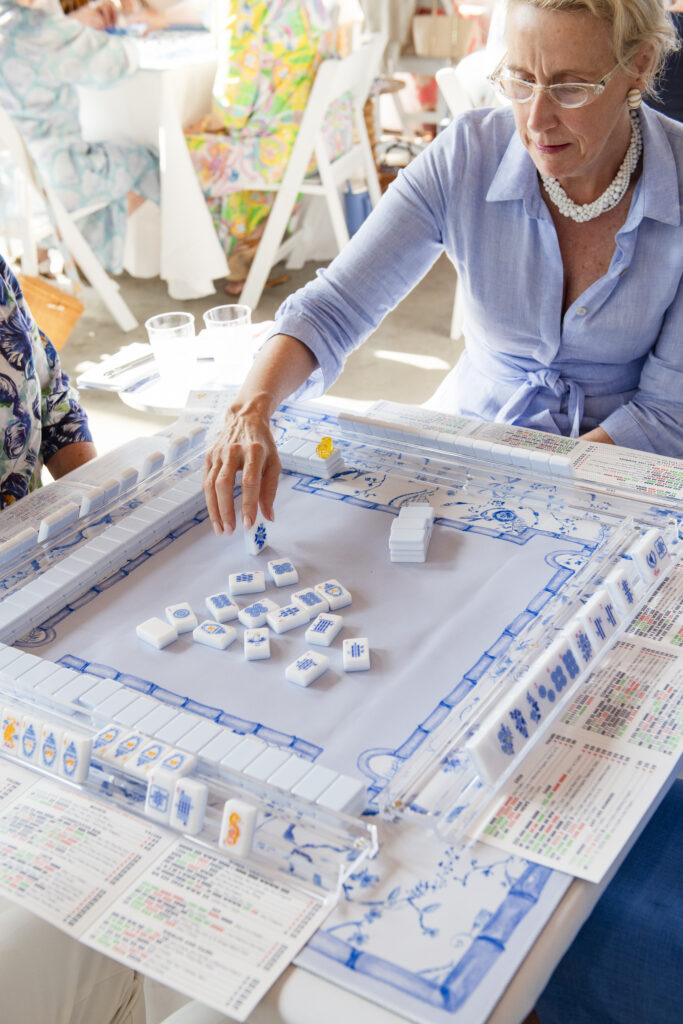
Today, more than a century after mahjong originated outside Shanghai, there are more than 40 variations played around the world. American mahjong challenges players to choose a hand from one of nine categories listed on the National Mah Jongg League’s game card and replicate it by strategically collecting and discarding tiles.
Categories include “Any Like Number,” “1-3-5-7-9,” and “Winds and Dragons.” Composing a winning hand is something like collecting the ingredients listed in a recipe and combining them in the exact order and amounts listed. Instead of sugar, butter, and eggs, the recipe for a winning mahjong calls for specific tiles in designated suits racked in a precise sequence.
Beginners are urged to register for a class. Check with area senior centers, local libraries, and municipal parks and recreation offices for information. Experienced teachers for individual and group lessons can be found online.
Gone are the days when mahjong was restricted to places like The Elms, where Julia Berwind frequently invited friends for games in the estate’s conservatory. With its marble floor and open doors welcoming the fresh summer breeze, it was the perfect spot to play mahjong or bridge on sweltering August afternoons.
Now, anywhere in Newport County is a good spot for the game, so long as the company is entertaining and the competition fun.